
Are Shadow Dungeon armor sets shared across classes?
No. Sets are per class — fifteen for each of the four heroes, sixty lines total.

Shadow Dungeon armor sets are the class-locked gear packages that turn a talent spine into a finished kit. Official Steam copy lists 15 unique armor sets per class across four heroes — sixty set lines in total — and most of those sets carry affixes that reshape how skills behave, not just flat stats. This page is the Steam ARPG set guide for Shadow Dungeon by OO Cat, not an OSRS or Roblox namesake. Named piece tables stay in your client until we capture them; the rules here stay true either way. Verified August 27, 2026 · Steam.
Official feature lists are blunt: every hero gets fifteen armor sets of their own. Sets are not shared across Sorcerer, Holy Warrior, Archer, and Necromancer — an Archer threshold does nothing for a Necromancer stash pile.

| Class | Official fantasy | Armor sets |
|---|---|---|
| Sorcerer | Elemental magic | 15 |
| Holy Warrior | Dual blades | 15 |
| Archer | Deadly precision | 15 |
| Necromancer | Demons & skeletons | 15 |
Sixty set lines sounds huge until you remember you only wear one class at a time. Your real farm target is “the one or two lines that complete my spine,” not a completionist spreadsheet of all sixty. Treat alt classes as separate set economies.
Public OO Cat announcements confirm the fifteen-per-class count and that most sets include skill-form affixes. They do not publish a full sixty-name table. Do not invent Diablo-style set names in your notes — copy what the tooltip shows in your build of Shadow Dungeon.
Loot is already Legendary/Mythic heavy. Sets are how that pressure becomes identity: a threshold that rewrites a skill is often worth more than a slightly bigger raw number on a mismatched Mythic.
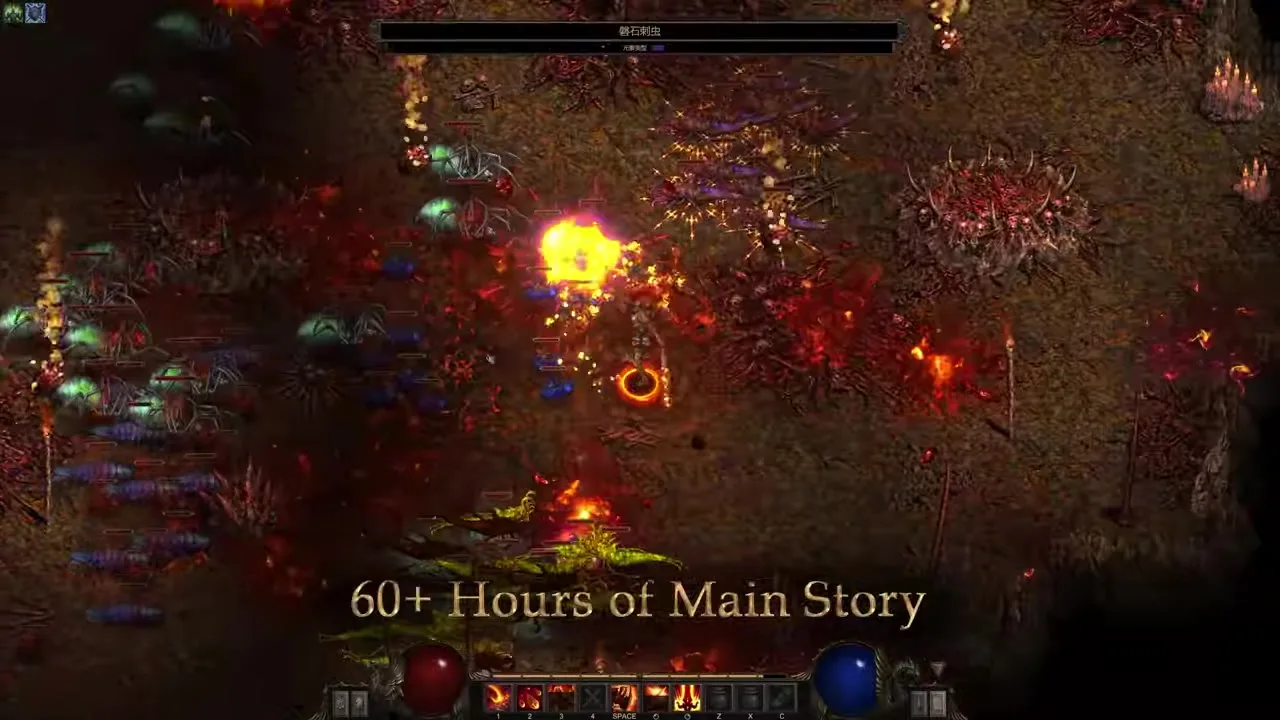

Armor sets pay off when you wear enough pieces of the same line to hit bonus thresholds. Exact piece counts and bonus text live in the client UI; the planning rule does not: unfinished sets are often worse than a coherent loose kit.
| Signal | What to do |
|---|---|
| One piece short of a known bonus | Farm that slot on-tier before chasing Mythic vanity |
| Bonus rewrites a skill you never press | Park the set; return to talents spine first |
| Bonus matches home tree + skill grants | Prioritize finishing pieces over random Legendaries |
| Tooltip unclear mid-fight | Screenshot the set UI after the map — decide in town |
Get the set online. Hit whatever piece threshold the in-game set tooltip shows (do not assume Diablo-style 2/3/4 breakpoints — counts are client-verified). A skill-changing bonus usually outranks polishing every affix on a half-finished line. Once the threshold is live, reforge and enchant toward your spine — deep crafting notes sit on equipment.
Official copy calls out that most armor sets include affixes that change skill form. That is the difference between “more damage” and “my rotation is a different skill.” Read the bonus before you commit materials; if it does not touch skills you press, stash the line.
Wearing two pieces from three different sets looks shiny in the stash and plays like no set at all. Pick one line, hit its next threshold, then decide whether a second line is even legal for your bar.
Matched by build plan, shared topics, and guide progression — not random related links.
Affix literacy matters here. A Mythic with wrong grants still loses to a set Legendary that completes your rotation — climb affixes before you worship rarity labels. Skill-grant gear is already common (more than half of equipment can carry extra skills); sets are the package that makes those grants feel intentional.
If you are still in early chapters, a clean mono-spine with on-tier loose Legendaries often clears faster than a half-collected endgame set. Set hunting scales with map power — see the farm section below.
| Situation | Prefer |
|---|---|
| Next piece completes a skill-changing threshold | Set piece — even if raw stats look softer |
| Set unfinished and the Legendary fills a defensive hole | Legendary until the hole closes |
| Legendary skill grant is unique to your rotation | Keep the grant; stash the set piece for later |
| Both options are off-spine | Sprite salvage — neither earns a bag slot |
| Rift-tier map, set almost complete | Finish set, then upgrade rolls on those slots |
Monster difficulty and loot quality follow the stage, not your level badge. Farm set pieces on maps your gear can finish cleanly; over-tier wipe farms feel busy and drop nothing useful.
| Stage | Set farm intent |
|---|---|
| Early chapters | Opportunistic pieces · finish only if bonus is immediate |
| Late story | Target the spine-matching line · ignore off-class noise |
| Post-story Greater Rifts | Primary set completion + affix upgrades |
| Mystic Dungeons | Alternate farm when rift walls appear |
During the seven-chapter campaign, treat set drops as lucky on-path rewards. Push chapter maps that match your power, salvage junk with Treasure Sprites, and only pause to farm when you are one piece from a bonus that changes clear speed.
After the story, Greater Rifts raise rare loot odds and let weapons roll denser affixes. That ladder is also where set completion becomes realistic for endgame kits — climb Normal → Master → Nightmare → Inferno only as clears stay clean.
Mystic Dungeons add challenge-mode pressure when you want variety without abandoning set goals. Use them when rift difficulty is stuck and you need a different loot rhythm — not as a replacement for on-tier rift farm.
When a set permanently changes your rotation, that is a legal respec trigger. Clear the talent board, re-buy the home spine, then spend into nodes that amplify the new skill form — do not sprinkle hybrid points first.
Finish one talent tree spine before you chase set bonuses that assume a different rotation. Unlimited skill points arrive late; early hybrids plus unfinished sets is how kits stall. Map spend rules on talents and starter kits on builds.
Sorcerer lines should feed elemental coverage, Holy Warrior lines dual-blade tempo, Archer lines precision and spacing, Necromancer lines summon uptime. If a set bonus fights that sentence, it is the wrong line — even if the rarity looks expensive.
After level 100, Paragon continues power growth. Slot Paragon choices that protect the clear identity your set already enables — more of what works — instead of spreading into experiments. Full leveling context lives on progression.
Treasure Sprites and Fairy QoL exist so salvage is fast. Use them. A bag full of almost-sets is slower than a bag with one finished line and clean junk conversion to gold.
| Mistake | Fix |
|---|---|
| Collecting three partial sets at once | Commit to one threshold line |
| Equipping every Legendary that drops | Filter by set fit + skill grants |
| Farming maps above gear power | Drop a tier; finish on-tier clears |
| Reforging before the set is online | Hit threshold first, then polish rolls |
| Chasing sets before a talent spine | Lock builds / talents first |
| Inventing set names from other ARPGs | Copy client tooltips only |
If the class fantasy is still fuzzy, back up to classes before you farm another set piece.
No. Sets are per class — fifteen for each of the four heroes, sixty lines total.
Often at skill-changing thresholds. Loose Mythics still win when they grant a unique skill you press or fill a defensive hole while the set is unfinished.
Official public posts confirm the fifteen-per-class count and skill-form focus, not a full name table. Use in-game tooltips as source of truth.
Opportunistically during story; seriously after you can clear on-tier late maps or Greater Rifts without wiping for vanity pieces.
No — this guide covers the Steam ARPG by OO Cat. Ignore Runescape results when searching armor sets.
Matched by build plan, shared topics, and guide progression — not random related links.